
The Family’s Legal Defense
Defending JacobThe defense shifts between insisting Jacob did not commit the crime and preparing to explain his behavior through psychiatric and genetic evidence.
increasing Bearing strength in each event
 decreasing
Bearing strength in each eventdecreasingCounsel and Control

Counsel and Control
Jonathan’s promise
Jonathan tells Jacob that he is the client and should retain a say in his defense. He also warns that every case has an “oh shit” moment when the evidence feels overwhelming.
A difficult alliance
Jacob listens with little visible reassurance. Andrew wants an active counter-investigation, while Jonathan emphasizes the prosecution’s burden and the limits of what the defense can prove.
The Story Tested
The Story Tested
Jacob’s account
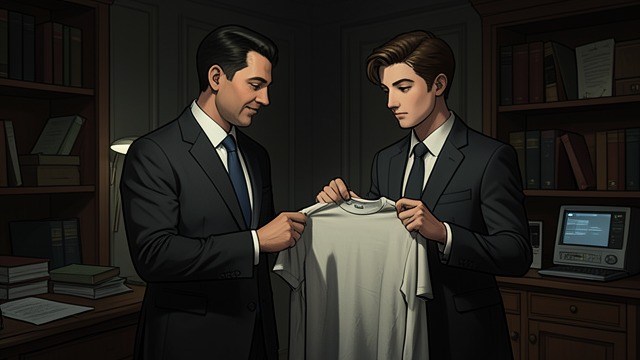
Jacob says he found Ben’s body and touched the sweatshirt while trying to help. Jonathan questions the sequence closely, exposing uncertainty in Jacob’s memory and gaps in the account.
A witness the defense cannot call
Jonathan warns that cross-examination will make the story sound implausible. The session persuades Andrew that a passive defense may not be enough, even though Jacob cannot safely testify.
The Psychiatric Inquiry

The Psychiatric Inquiry
A clinical portrait
Dr. Vogel evaluates Jacob’s history and discusses possible disorders, including narcissistic and attachment-related traits. Laurie supplies childhood incidents; Andrew disputes their significance.
Defense preparation becomes family conflict
The examination is intended to help the defense, but its findings unsettle everyone. Andrew fears that clinical descriptions will turn ordinary adolescent flaws into proof of dangerousness.
Mitigation on the Horizon
Mitigation on the Horizon
A fallback position
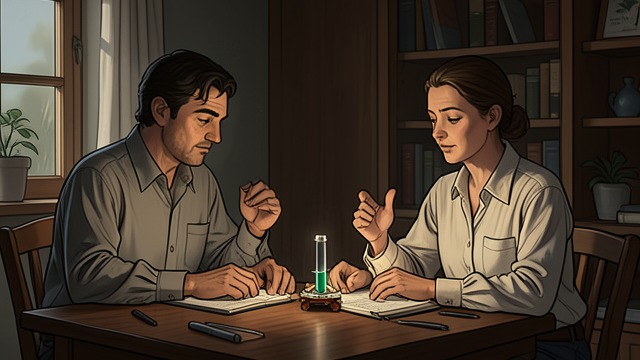
The defense considers whether genetic predisposition and impulse control could reduce the degree of criminal responsibility if the jury finds Jacob acted. Jonathan’s preparation assumes the evidence might be worse than Andrew hopes.
A painful bargain
Andrew provides DNA samples because he wants to protect Jacob, although he rejects the public label of an inherited “murder gene.” The defense strategy forces him to entertain a possibility he cannot emotionally accept.
The Defense Rests on Doubt
The Defense Rests on Doubt
Evidence challenged
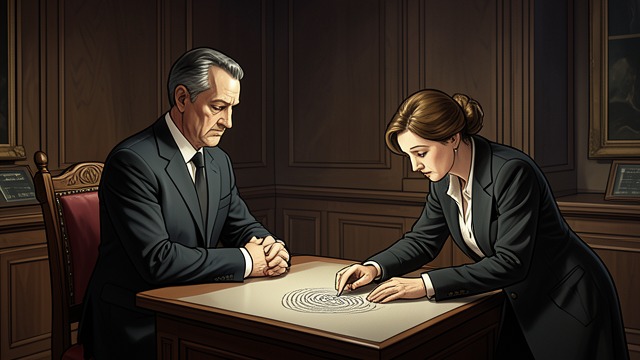
Jonathan disputes the timing and significance of Jacob’s fingerprint, questions the knife evidence, and emphasizes the absence of blood or other traces linking Jacob to the scene.
No final certainty
The legal argument is stronger than Andrew’s private confidence can bear. The defense must ask the jury to distinguish a compelling suspicion from proof beyond a reasonable doubt.
April 2007, after Jacob’s arrest
Spring 2007, during defense preparation
Summer 2007, during the defense evaluation
Late summer 2007, before trial
Mid-October 2007, during trial
